History
The Place of Truth Western Thebes & Deir el-Medina · c. 1159–1107 BCE (20th Dynasty) 15+

The Place of Truth

Fifty-two years in Set Maat, the walled desert village of the men who cut and painted Pharaoh’s tomb in Western Thebes, told by people who never held the official pen: a draughtsman, a water-carrier, a weaver and a captain of the desert police.

Western Thebes & Deir el-Medina · c. 1159–1107 BCE (20th Dynasty) · 15+

Start here: Start with Book I, The Five Walls: the winter of Year 29 of Ramesses III, when the grain was eighteen days late and the tomb crew walked out past the guard-walls. Then try the Labs, where you can see how long a household’s flour lasts, weigh a copper chisel, or move a lamp across a drawn limestone flake. The Atlas shows the stand where water was poured at the village gate, and how it differs from the dry Great Pit up the slope.

The three spines together make one picture of a limestone flake under a draughtsman’s correction, 59.7 mm across the shelf.

Four Things to Know About Set Maat

Set Maat, the village known today as Deir el-Medina, sat in a dry hollow in the hills of Western Thebes. It had no spring and no well. Its grain came by barge and its water by donkey, and in return its sixty to a hundred and twenty workmen cut and painted the royal tombs in the Valley of the Kings.

Four Witnesses Who Did Not Write the Record

Book I is seen through four people: Mose, a draughtsman; Pashedu, a water-carrier from outside the village; Tarekhanu, a weaver who keeps her household’s accounts; and Montumes, chief of the desert police. The scribe Amennakht, who wrote the record that survives, is only ever seen from outside.

The Water Stand and the Great Pit

Every jar of water was carried up from the fields and poured into big jars at a stand just outside the village’s northern gate, which the books call ta shedyt. It is easy to confuse with the Great Pit nearby: a shaft sunk more than fifty metres in search of water, which never found any and became the village rubbish tip, full of written and drawn flakes of stone.

Grain for Wages, Copper for Prices

There were no coins. A workman was paid each month in sacks of grain, and prices were reckoned in weights of copper (the deben, about 91 grams) or in the larger seniu. Throughout these books one sack, a khar, holds 76.88 litres, a little under 77.

Stone Keeps, Papyrus Can Be Washed

Draughtsmen sketched on flakes of limestone in red and corrected in black. Wipe the stone wet and it only smears, so first thoughts survive. Papyrus was costly, and could be washed and written over. Book I turns on that difference: what the official roll says, and what it said before.

Labs, Scripts and Atlas

Lab I · How Long Does the Flour Last?

Choose a household’s size and how late the grain is, and watch the bin go down, set beside the sealed temple stores filling for the king’s jubilee. You can switch between two modern estimates of how much a sack held.

Lab II · Chisels and Lamp-Wicks

Weigh a copper chisel out of the stores and back in, as the crew did, and see how far five hundred and sixteen lamp-wicks go in the dark of a royal tomb.

Lab III · Two Inks and a Washed Page

Move a lamp low across a drawn limestone flake to find the red first sketch under the black correction, then look at a papyrus that has been washed and written over, where only a ghost of the first writing is left.

Atlas of Set Maat and Western Thebes

Ten places on one map, from the village gate to the temples on the plain. Switch between a walk through Year 29 and a modern survey view, and see why the water stand and the Great Pit are two different places.

Volumes

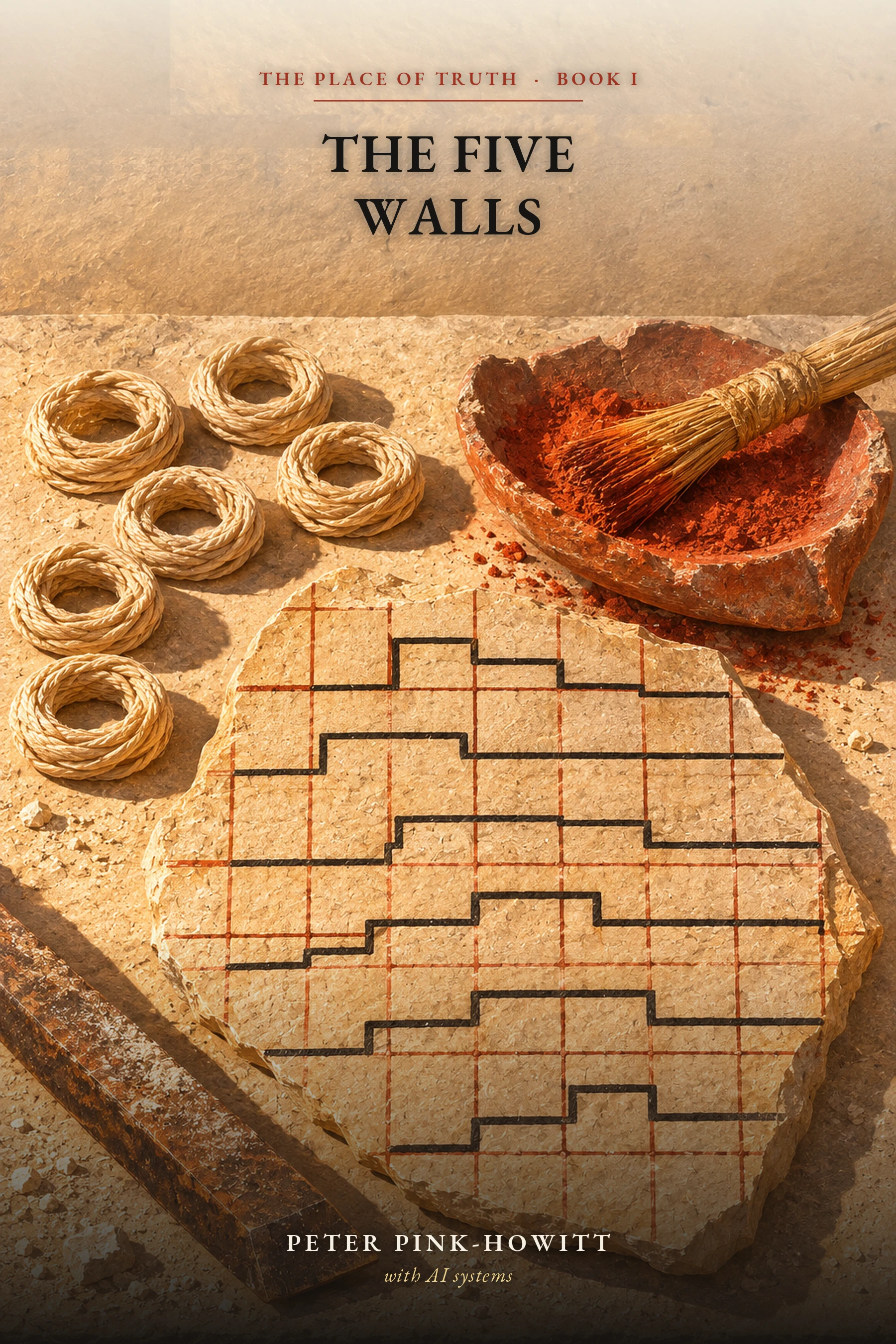
Cover for Book I: The Five Walls

Book I: The Five Walls 15+

Year 29 of Ramesses III. The grain barges are late, and Set Maat, the walled village of the men who build Pharaoh’s tomb, is running out of bread. Down on the plain the temple storehouses stand full, sealed for the king’s jubilee. On the eighteenth day without rations the crew do something no one yet has a word for: they walk out past the five guard-walls, saying ‘We are hungry’, and sit down behind the temples. Four people live through what follows. Mose lays out the figures on the tomb walls in red and black. Pashedu carries water up from the fields to the village gate and cannot read the tallies kept about him. Tarekhanu weaves, and keeps her household going on grain owed and promised. Montumes, chief of the desert police, holds the walls between the village and the plain. And the scribe Amennakht, seen only from outside, writes it all down, or most of it.

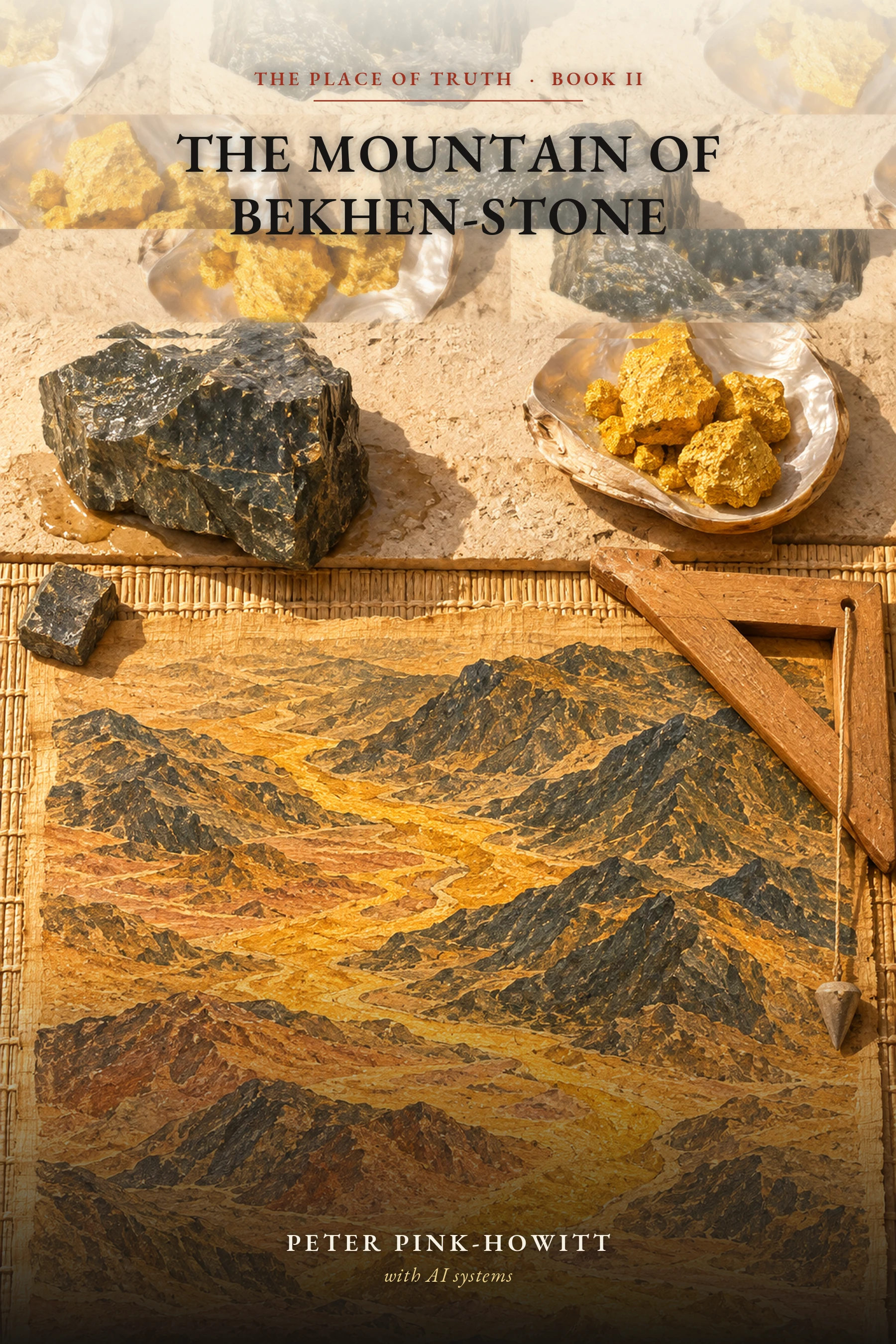
Cover for Book II: The Mountain of Bekhen-Stone

Book II: The Mountain of Bekhen-Stone 15+

A new king, Ramesses IV, wants a bigger tomb and more statues. He doubles the village crew to a hundred and twenty men and sends draughtsmen with an army of 8,368 soldiers, quarrymen and hauliers into the Wadi Hammamat to bring back dark green-black bekhen stone. The inscription they leave in the rock records that nine hundred of them died. The wadi is drawn on the Turin Papyrus Map, the oldest geological map to survive. Back home the village lives through quick changes of king, raids from the desert that stop work in the Valley, and the law of the household, as Naunakhte, an old free woman of the village, goes before the village court to cut four of her children out of her will.

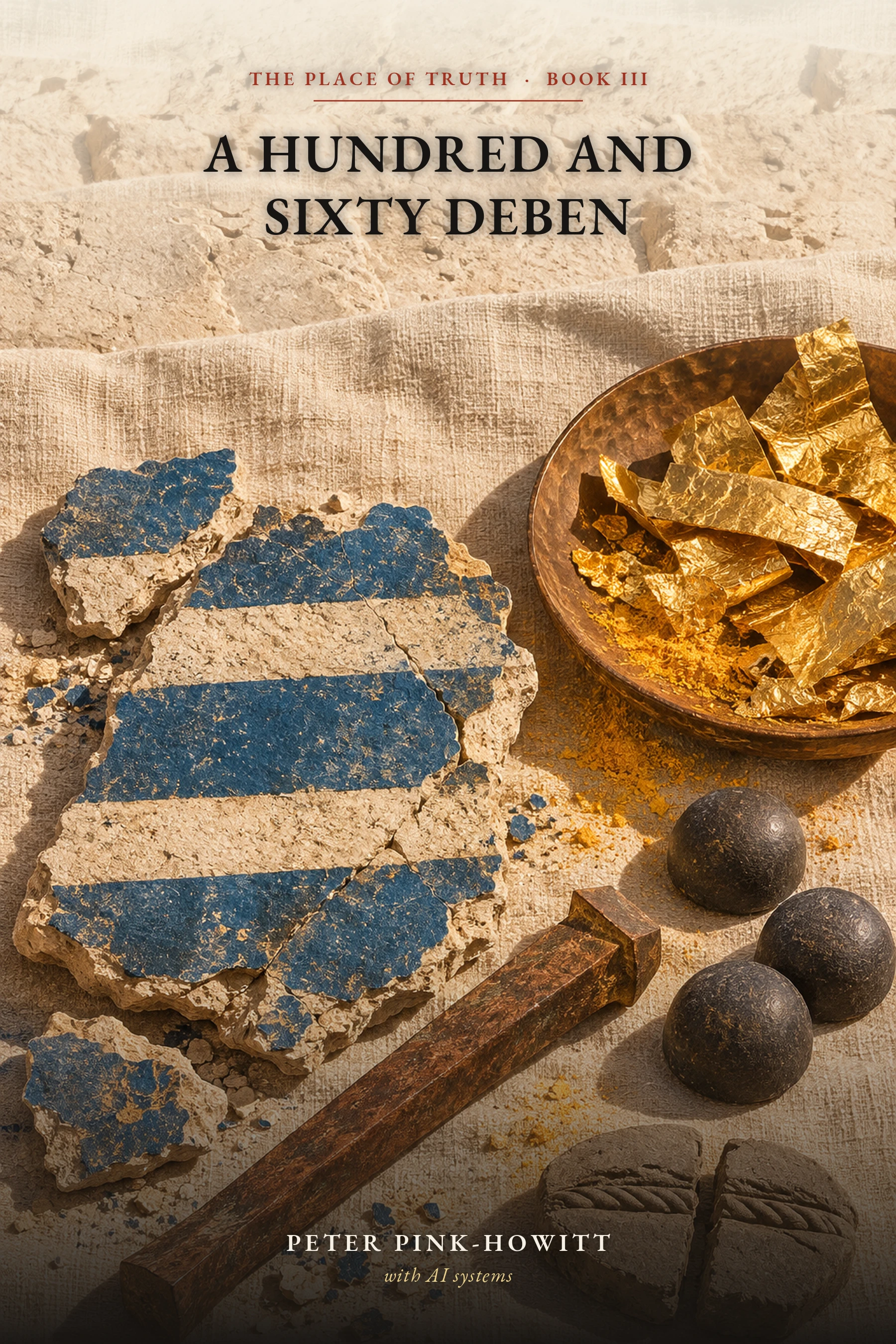
Cover for Book III: A Hundred and Sixty Deben

Book III: A Hundred and Sixty Deben 15+

Years 13 to 19 of Ramesses IX. Grain prices are soaring, raiders come out of the desert, and Paser, mayor of East Thebes, and Paweraa, mayor of West Thebes and chief of its police, are at each other’s throats. A gang of eight led by the stonecutter Amenpanufer tunnels into the pyramid of King Sobekemsaf II and Queen Nubkhas, strips a hundred and sixty deben of gold from the royal mummies, nearly fifteen kilograms, burns the coffins, and weighs out twenty deben a man. As the commissions of the two banks fight over the truth and soldiers march on Medinet Habu, four centuries of the walled village draw to a close.

Chronology & Story Scrubber

Year 29 of Ramesses III, second month of Peret, day 9 (c. 1159 BCE) — An ostracon in the Petrie Museum, London (UC 39608), records 516 lamp-wicks shared out among the crew · Book I opens on the evening before the walkout: the crew hand in their copper chisels to be weighed, and the village bins are nearly empty.
Year 29, second month of Peret, days 10 to 13 — The Turin Strike Papyrus (P. Turin Cat. 1880) · With the grain eighteen days late, the crew walk out past the five guard-walls saying ‘We are hungry’, and sit down behind the temples on the plain.
Year 32 of Ramesses III — The king’s mummy and the Judicial Papyrus of Turin record a plot against Ramesses III inside his own household · The last year of a long reign. How the news reaches the village is for Book I to tell.
Year 3 of Ramesses IV (c. 1153 BCE) — Wadi Hammamat Great Rock Stela (8,368 men; 900 dead) & Turin Papyrus Map · The crew is doubled to a hundred and twenty men, and draughtsmen and cutters are sent across the Eastern Desert for dark green-black bekhen stone.
Year 3 of Ramesses V (c. 1147 BCE) — The Will of Naunakhte (P. Ashmolean 1945.97) · Naunakhte, a free woman of the village, stands before the village court and cuts four of her children out of her will for failing to look after her in old age.
Years 13–16 of Ramesses IX (c. 1113–1110 BCE) — P. Leopold II-Amherst (160 deben gold robbery) & P. Abbott (BM EA 10221) · The stonecutter Amenpanufer and his gang strip 160 deben of gold from the mummy of King Sobekemsaf II, while the mayors of the two banks of Thebes quarrel over who is to blame.
Years 17–19 of Ramesses IX (c. 1109–1107 BCE) — P. Mayer A, P. BM EA 10052 & Medinet Habu relocation · War around Thebes and raids from the desert drive the last households of the village behind the walls of Medinet Habu.